
We are a non-partisan think tank applying hindsight, insight and foresight to explore major challenges and opportunities facing New Zealand over the long term.
We are committed to positively influencing public policy by empowering New Zealanders to have the uncomfortable, but necessary, conversations that are required to enable New Zealand to realise its potential.
NEWS AND EVENTS
Latest news and events
Next event
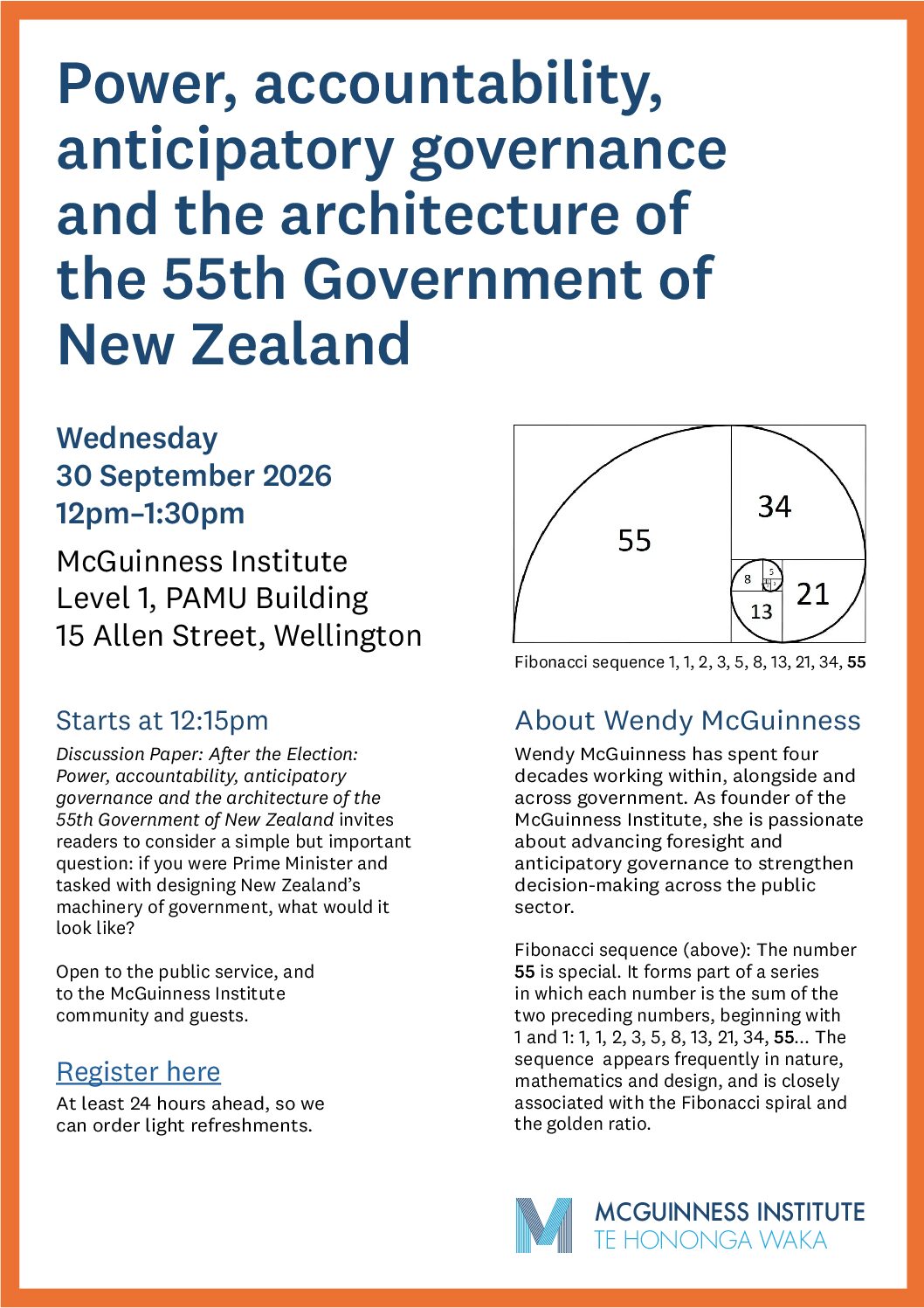
Discussion Paper: After the Election: Power, accountability, anticipatory governance and the architecture of the 55th Government of New Zealand invites readers to consider a simple but important question: if you were Prime Minister and tasked with designing New Zealand’s machinery of government, what would it look like?
Open to the public service, and to the McGuinness Institute community and guests. Register here.
Working Paper 2026/04 – Workforce composition by government departments since 2000
September 2026
Download (PDF 7 MB)
This working paper graphs each departments FTEs since 2000.
See press release: 3 Sep 2026
McGuinness Institute newsletters
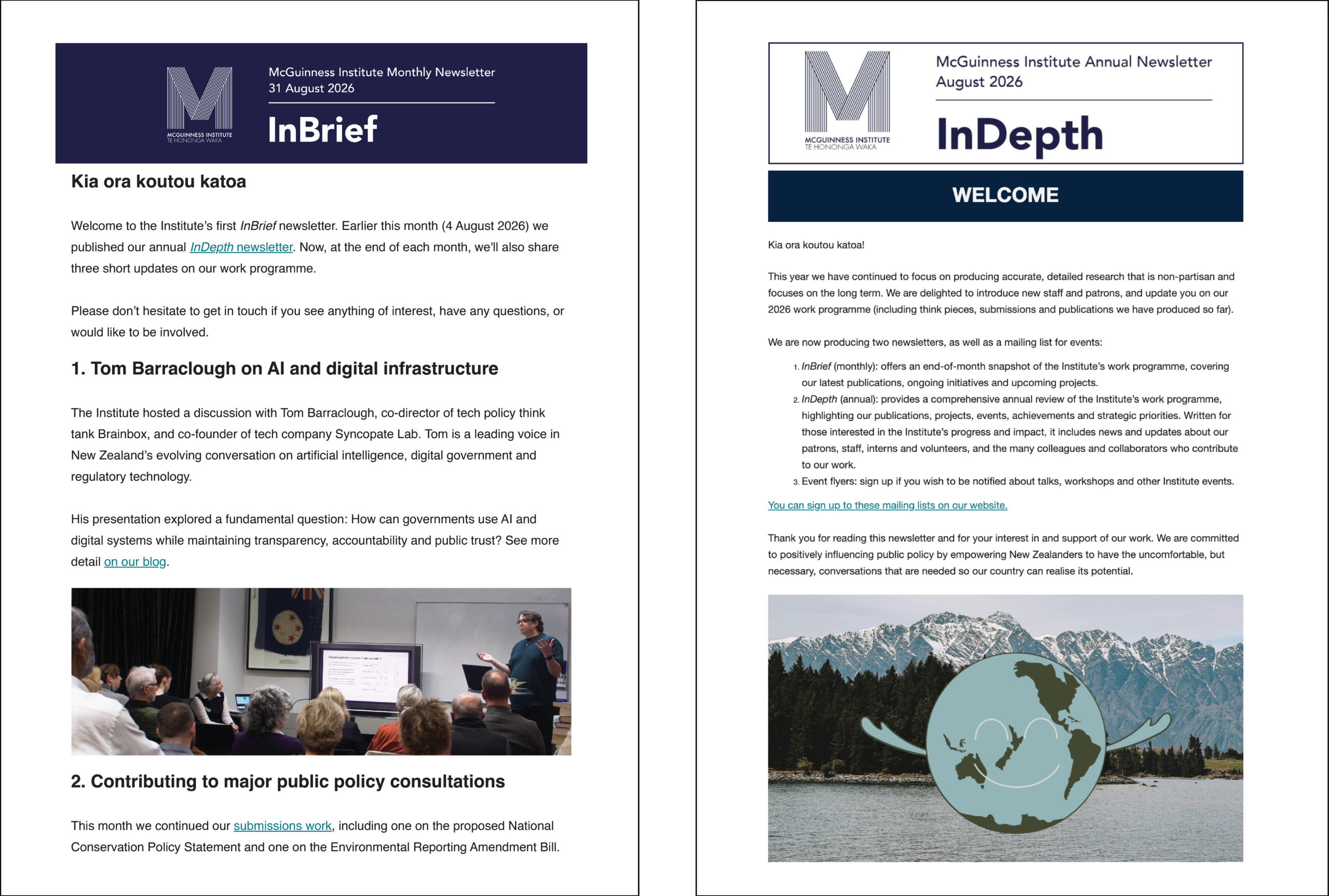
We are now producing two newsletters, InBrief (monthly) and InDepth (annual). Subscribe to our newsletters.
The 31 August 2026 InBrief newsletter
In this month’s update, we look back at August’s key activities, from Tom Barraclough’s event on AI and digital infrastructure to our input into major public policy consultations and the On the Fence website.
The annual InDepth newsletter
This newsletter provides a comprehensive annual review of the Institute’s work programme, highlighting our publications, projects, events, achievements and strategic priorities. Written for those interested in the Institute’s progress and impact, it reflects on the year that has been and outlines our priorities for the year ahead. It also includes news and updates about our patrons, staff, interns, volunteers, and the many colleagues and collaborators who contribute to our work.
CIVICSNZ
Project CivicsNZ
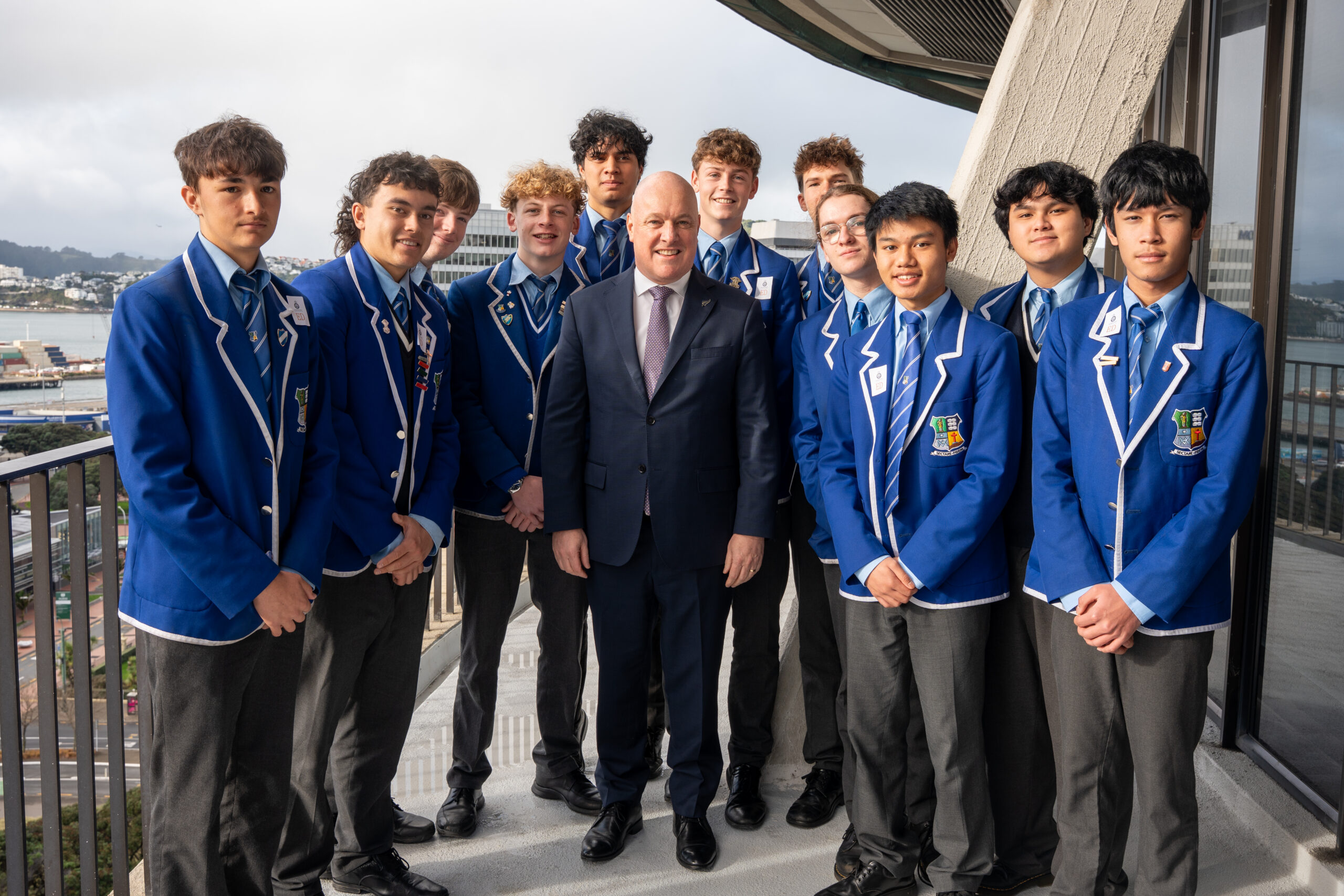
St Patrick’s College Visit to the Beehive: A CivicsNZ Experience
On 16 June 2026, the McGuinness Institute Te Hononga Waka supported a group of students from St Patrick’s College, Wellington, during a visit to New Zealand Parliament. Read the questions the students asked the Prime Minister in the blog here.
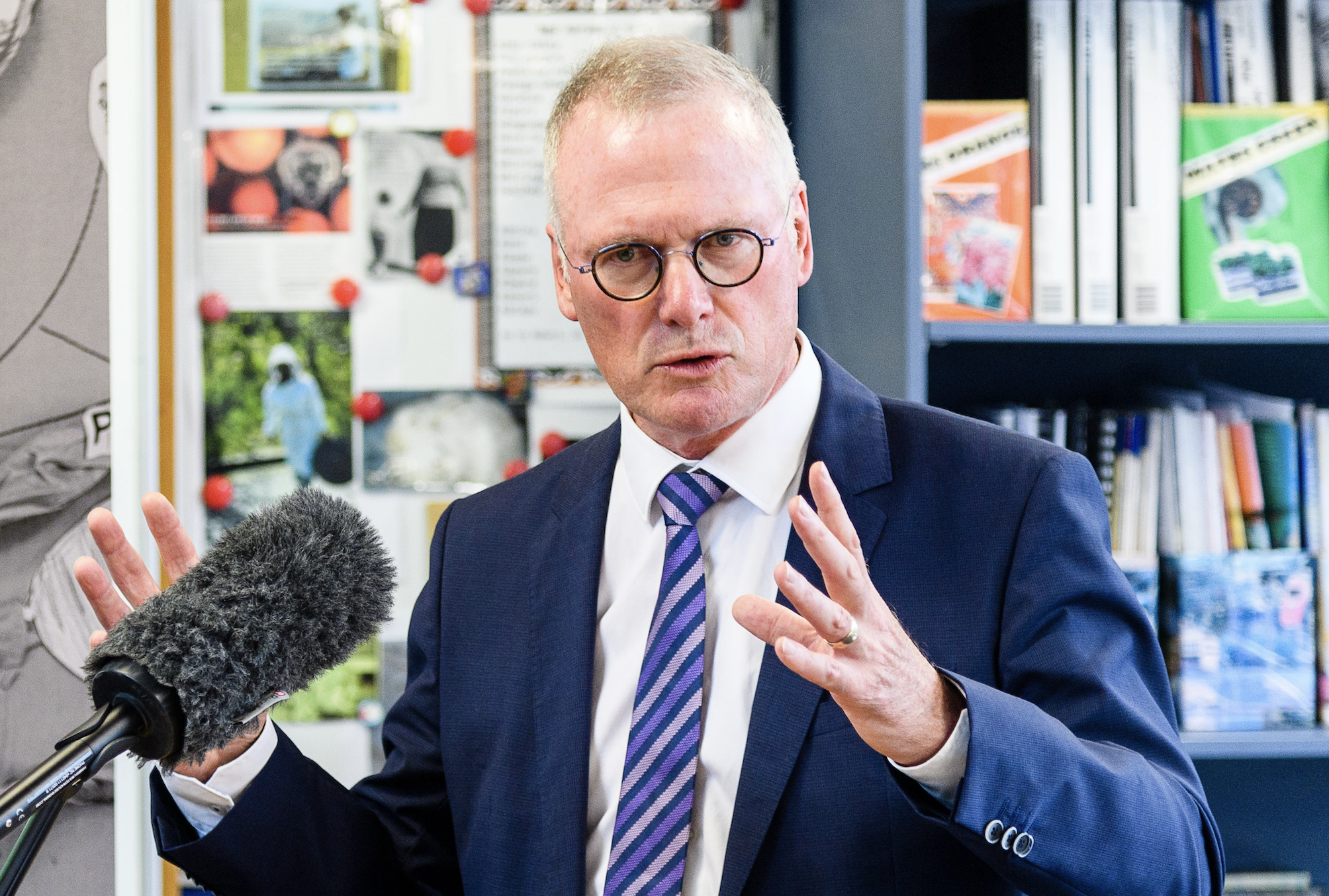
Think Piece 50 – What about ‘Unleashing’ Public Servants?
Steve Maharey’s think piece argues that only by empowering public servants can we unlock the leadership, innovation, and responsible risk-taking needed to tackle today’s challenges. A culture of distrust and suspicion undermines these behaviours. See the think piece here.
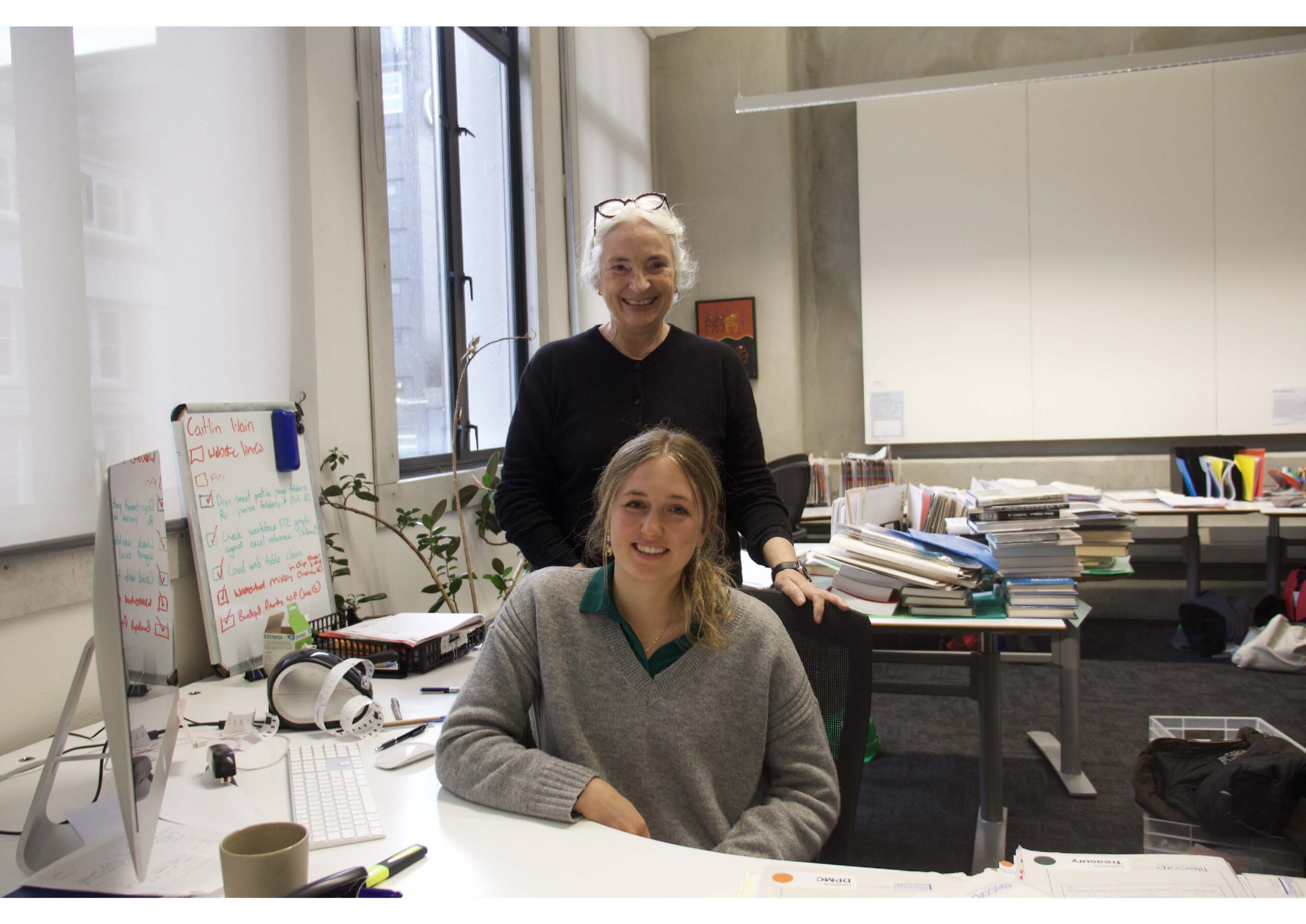
Meet Our 2026 Winter Intern: Caitlin Wain
For the past two months, the McGuinness Institute has had the pleasure of hosting Caitlin Wain as our winter intern. During her time with the Institute, Caitlin contributed to research projects exploring wildfire risk in New Zealand and the machinery of government, while also gaining insight into the role that long-term thinking can play in public policy.
Originally from Tauranga, Caitlin is currently studying at Dartmouth College in the United States. She is pursuing a double major in Economics and French while also competing as a student-athlete on Dartmouth’s rowing team. Caitlin’s positive and proactive approach to work was enjoyed by the whole team during her time with us.
Read more about Caitlin’s time at the Institute on our blog.
SECURITYNZ
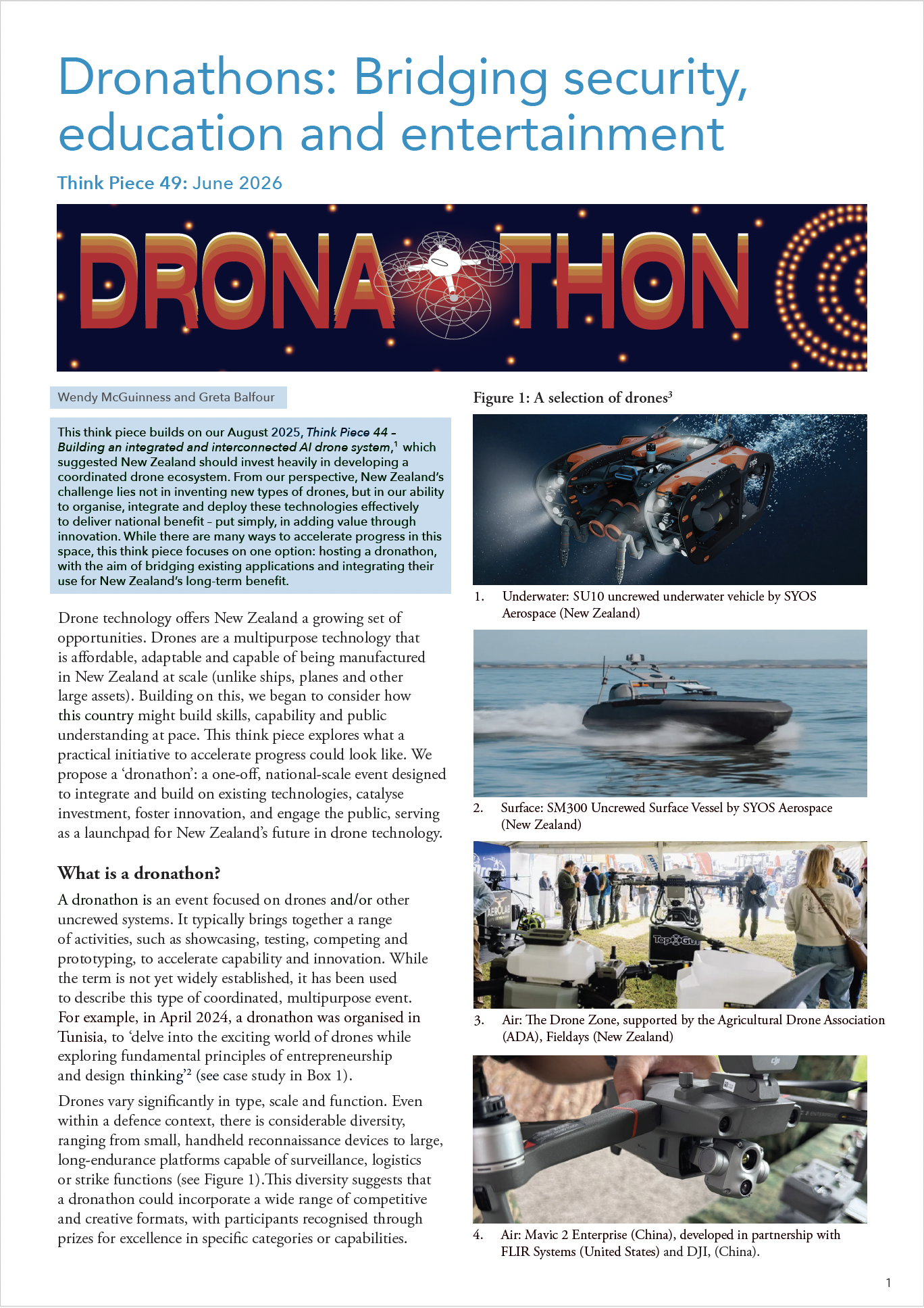
Think Piece 49 – Dronathons: Bridging security, education and entertainment
June 2026
See Think Pieces to view and download
Building on our earlier work on integrated drone systems (see Think Piece 44 – Building an integrated and interconnected AI drone system), this piece argues that New Zealand’s challenge is not invention, but innovation.
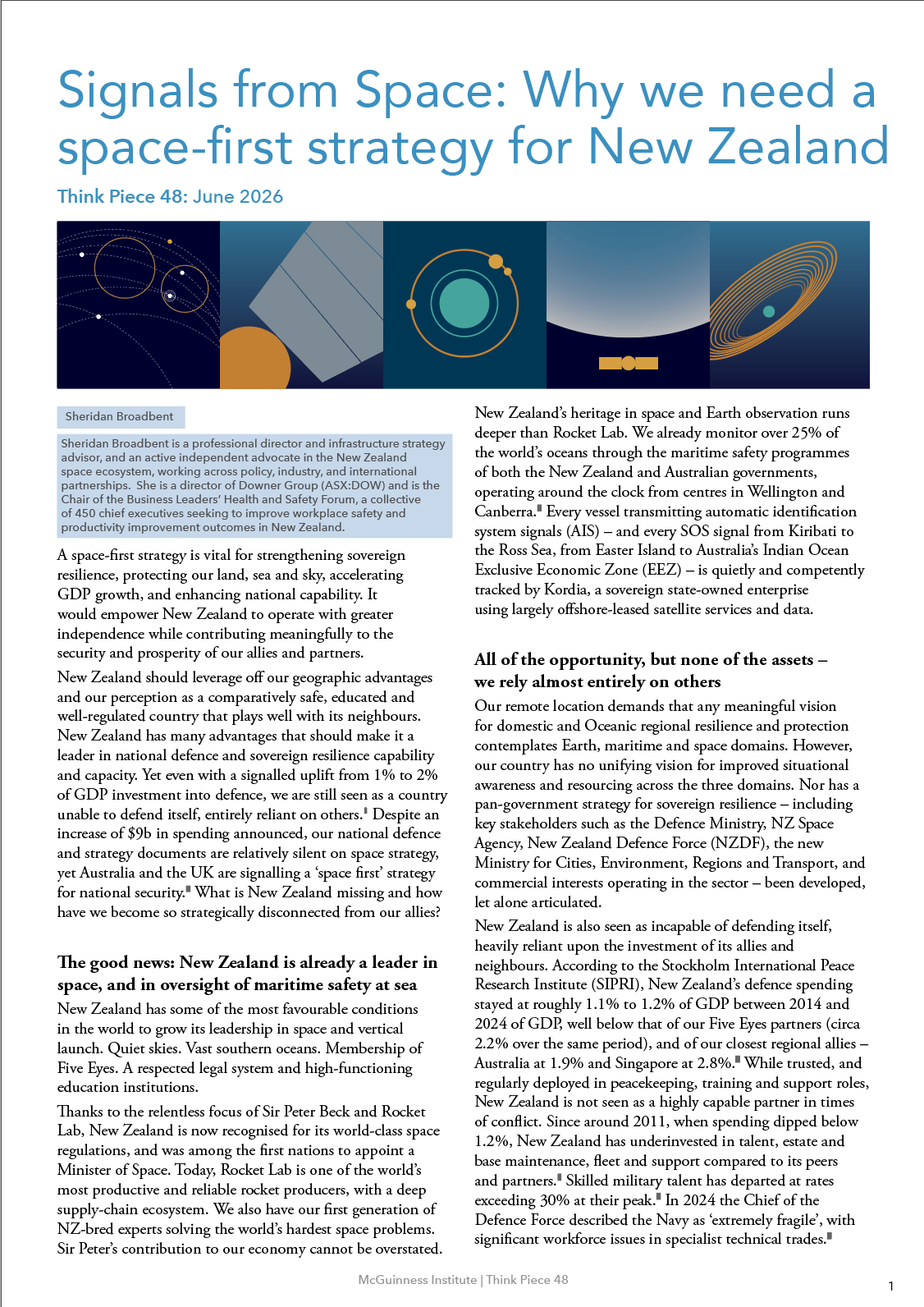
Think Piece 48 – Signals from Space: Why we need a space-first strategy for New Zealand
June 2026
See Think Pieces to view and download
This think piece explores the rapidly evolving role of space in shaping national resilience, security, and economic opportunity. Space is no longer a distant domain reserved for a handful of nations. It is now a critical layer of modern infrastructure, supporting everything from communications and navigation to environmental monitoring and defence capability.
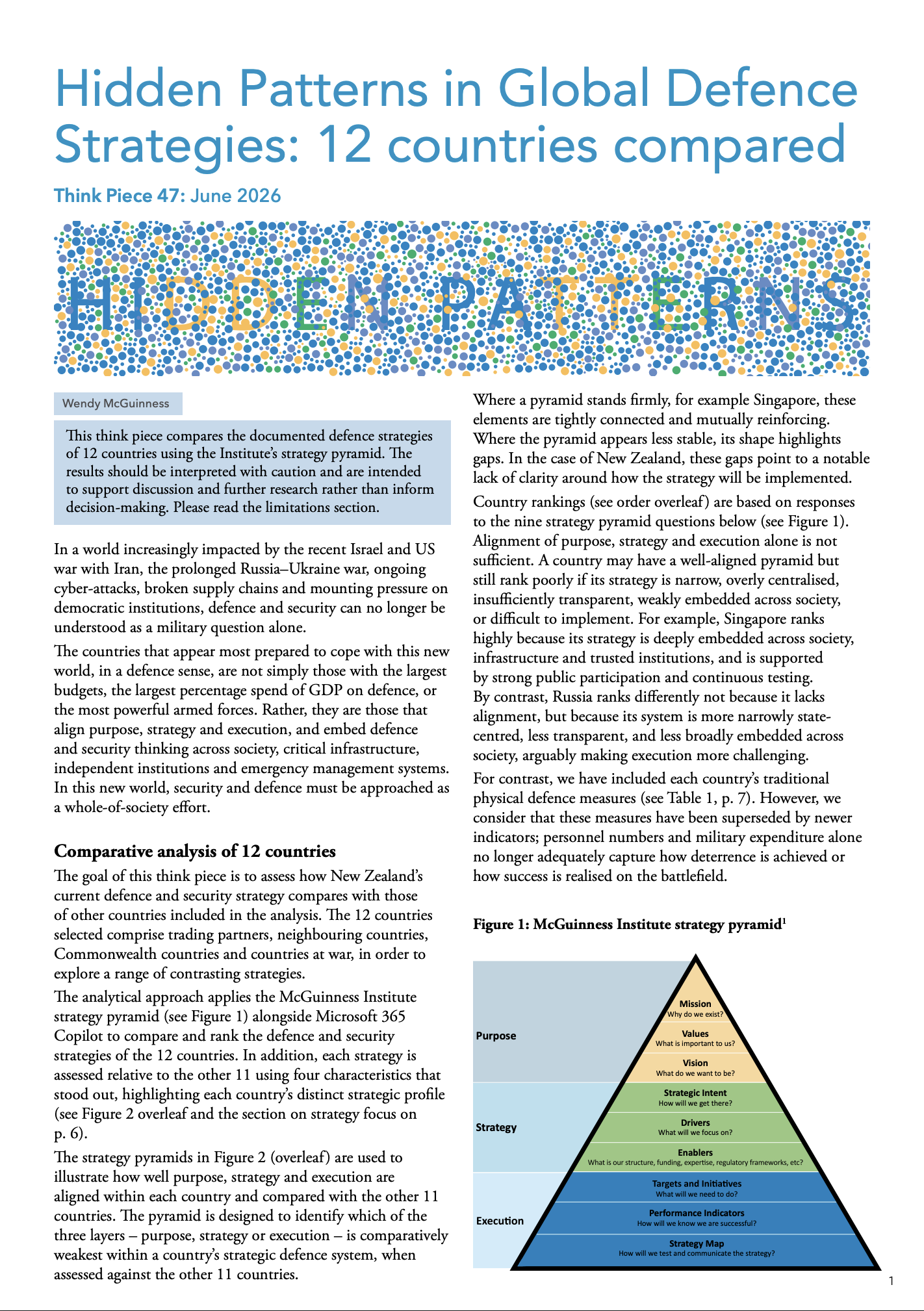
Think Piece 47 – Hidden Patterns in Global Defence Strategies: 12 countries compared
June 2026
See Think Pieces to view and download
The aim of this think piece was to understand what can be learned from comparing global defence strategies and to identify the lessons that can be applied to New Zealand. While the exercise was never expected to be perfect, it has nevertheless revealed patterns and insights that shed light on the way forward.
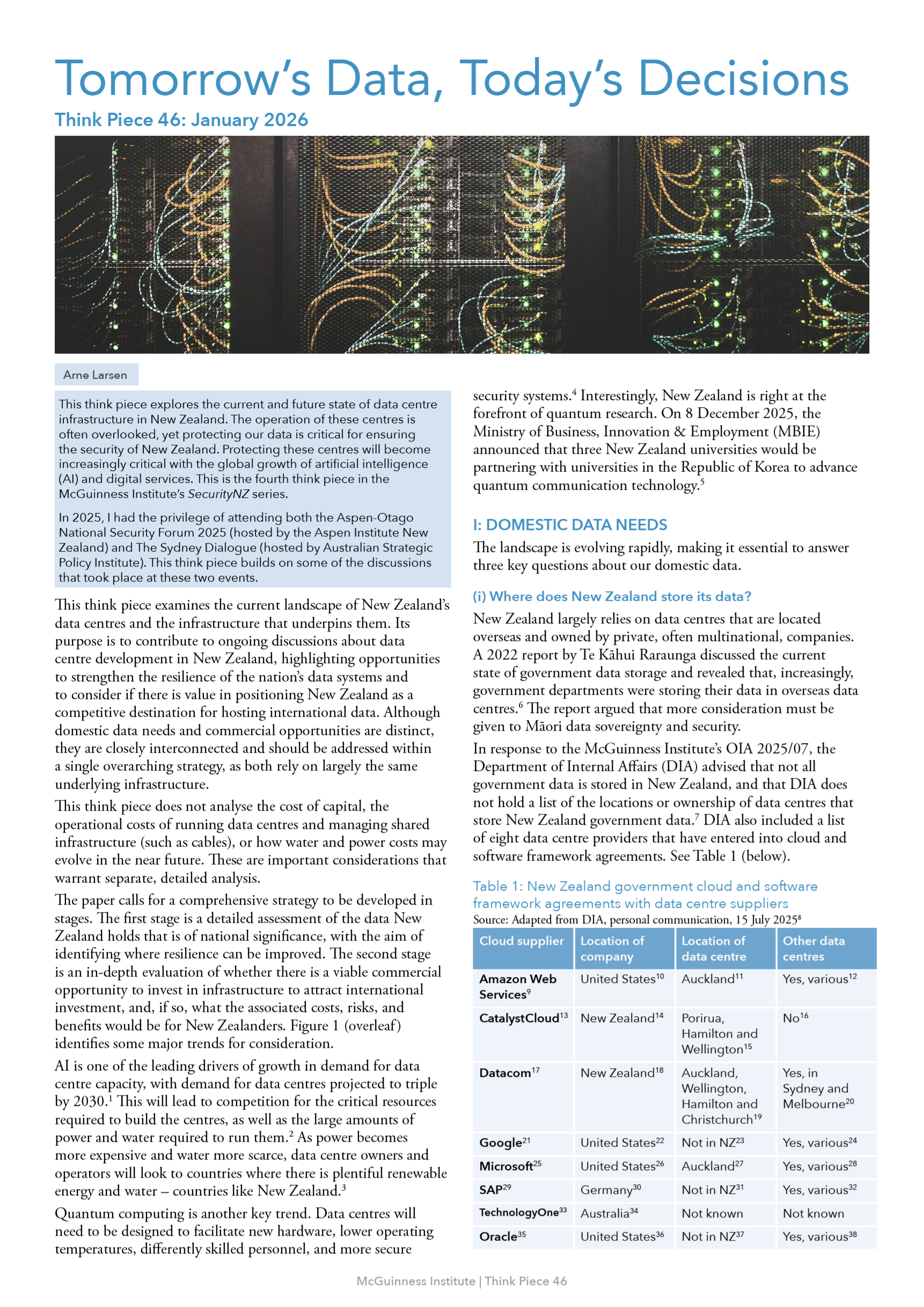
Think Piece 46 – Tomorrow’s Data, Today’s Decision
January 2026
See Think Pieces to view and download
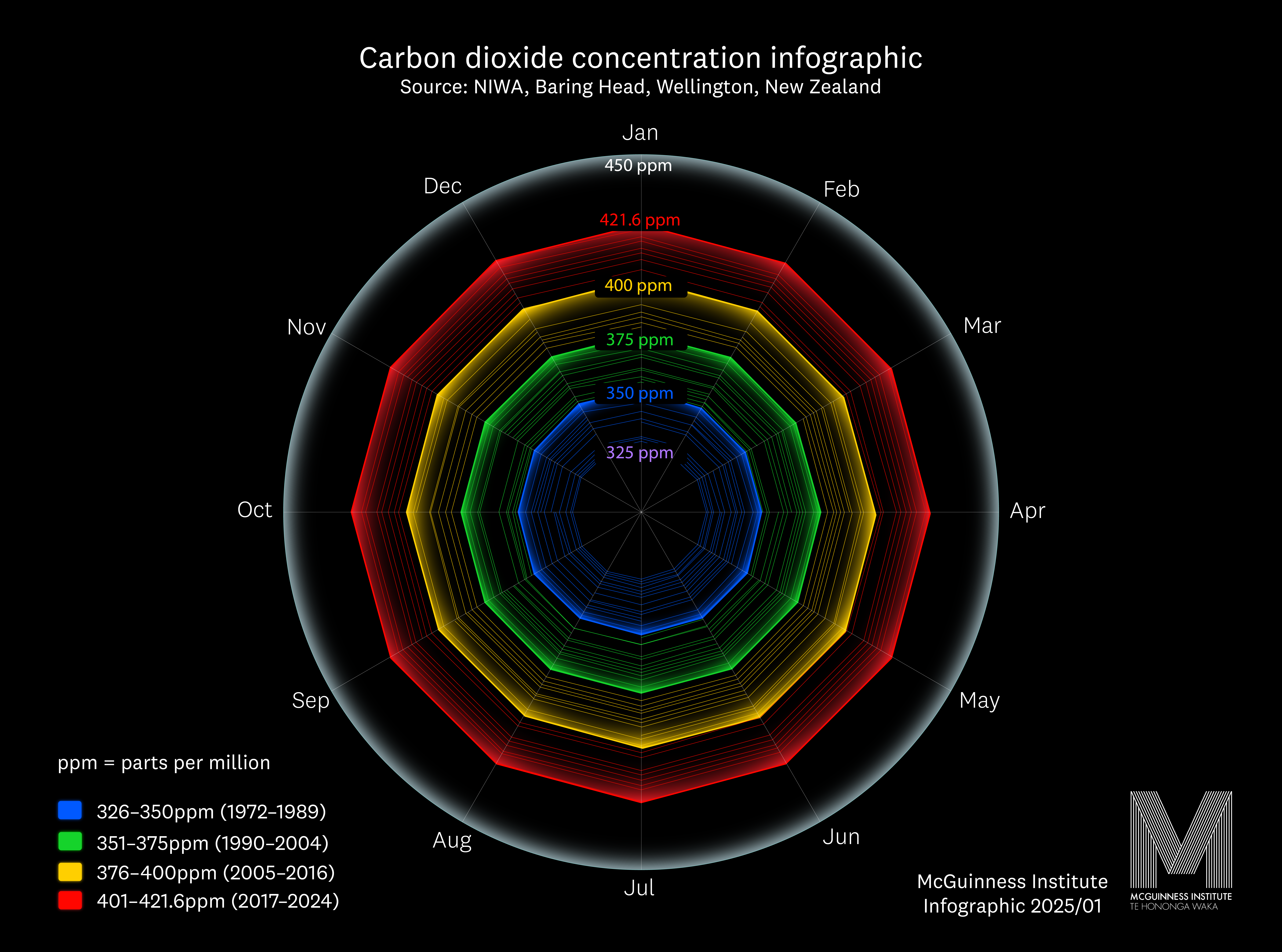
This think piece explores the current and future state of data centre infrastructure in New Zealand. The operation of these centres is often overlooked, yet protecting our data is critical for ensuring the security of New Zealand. Protecting these centres will become increasingly critical with the global growth of artificial intelligence (AI) and digital services. For a map of New Zealand’s submarine cable map in the context of overseas dependencies and threats, see our June 2025 inforgraphic here.

Think Piece 44 – Building an integrated and interconnected AI drone system
August 2025
See Think Pieces to view and download
This think piece explores how AI drones may help us navigate the geopolitical shifts occurring around us. As well as recommendations, we identify six key international developments and ten key domestic developments to monitor.
highlights
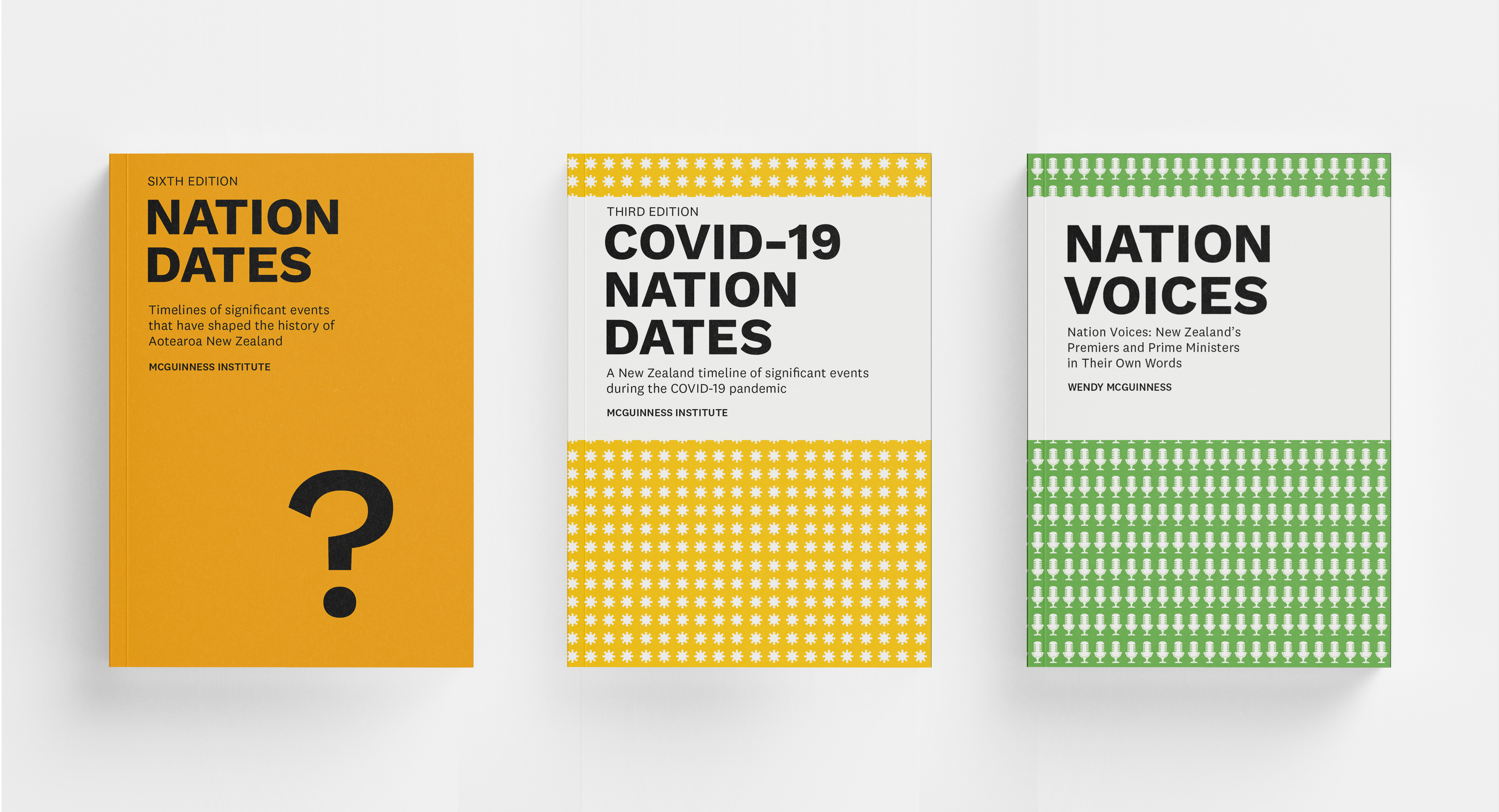

NZSX-LISTED SERIES
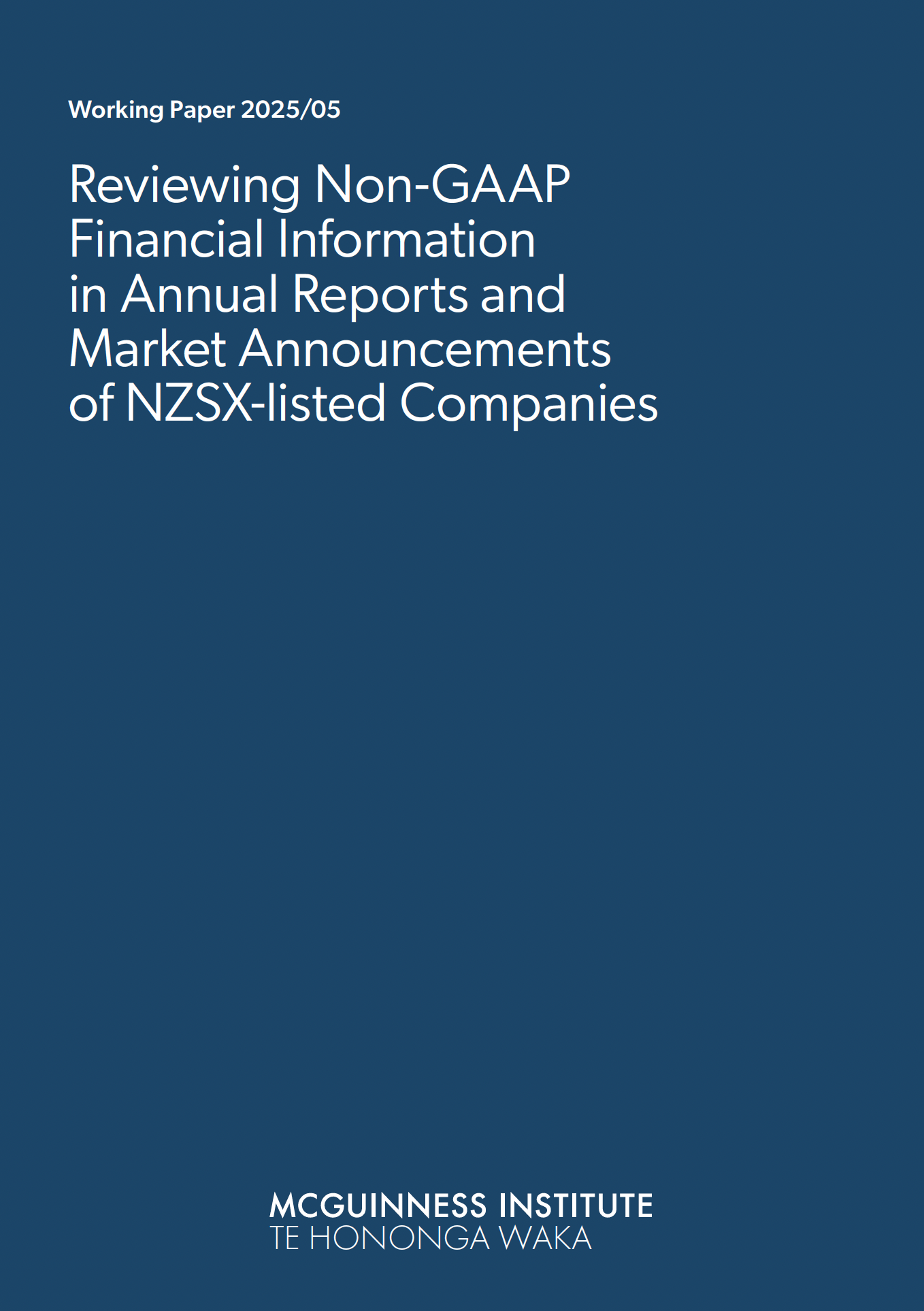
December 2025
See Working Papers to view and download
October 2025
See Working Papers to view and download
December 2025
See Working Papers to view and download
SPECIAL TOPIC
Emergency and crisis management
Emergencies and crises are increasing in number, making it important to have clear, robust systems in place so New Zealand can respond to them quickly and effectively as required.
In response to this, the Institute has produced research on how New Zealand responds to emergencies and crises, to both understand the distinction between the two and identify how to improve the emergency management system across the country (which includes various legislative and policy instruments). We hope this will help New Zealand respond better as issues arise in the future.
As part of this project, Wendy presented at the New Zealand Risk & Resilience Summit 2025 on 23 July 2025. The New Zealand Risk & Resilience Summit included learnings and insights in strategic planning, risk and resilience modelling through to organisational culture, operations and a broader view of supplier, customer, sector, community networks and relationship strategies.
Below are the three documents that make up this series on risk and uncertainty, as well as emergency and crisis management.

NEW
Working Paper 2025/13 – The Language of When Things Go Wrong: Exploring how the terms ‘emergency’ and ‘crisis’ are used in legislation
July 2025
See Working Papers to view and download

NEW
Working Paper 2025/14 – Examination of the Emergency Response and the Crisis Response within the National Resilience System
August 2025
See Working Papers to view and download
NEW
Discussion Paper 2025/02 – How to Tell the Difference Between an Emergency and a Crisis and Why it Matters
July 2025
August 2025
See Discussion Papers to view and download

How to tell the difference between an emergency and a crisis, and why it matters
July 2025
See Slideshows to view and download
latest blogs
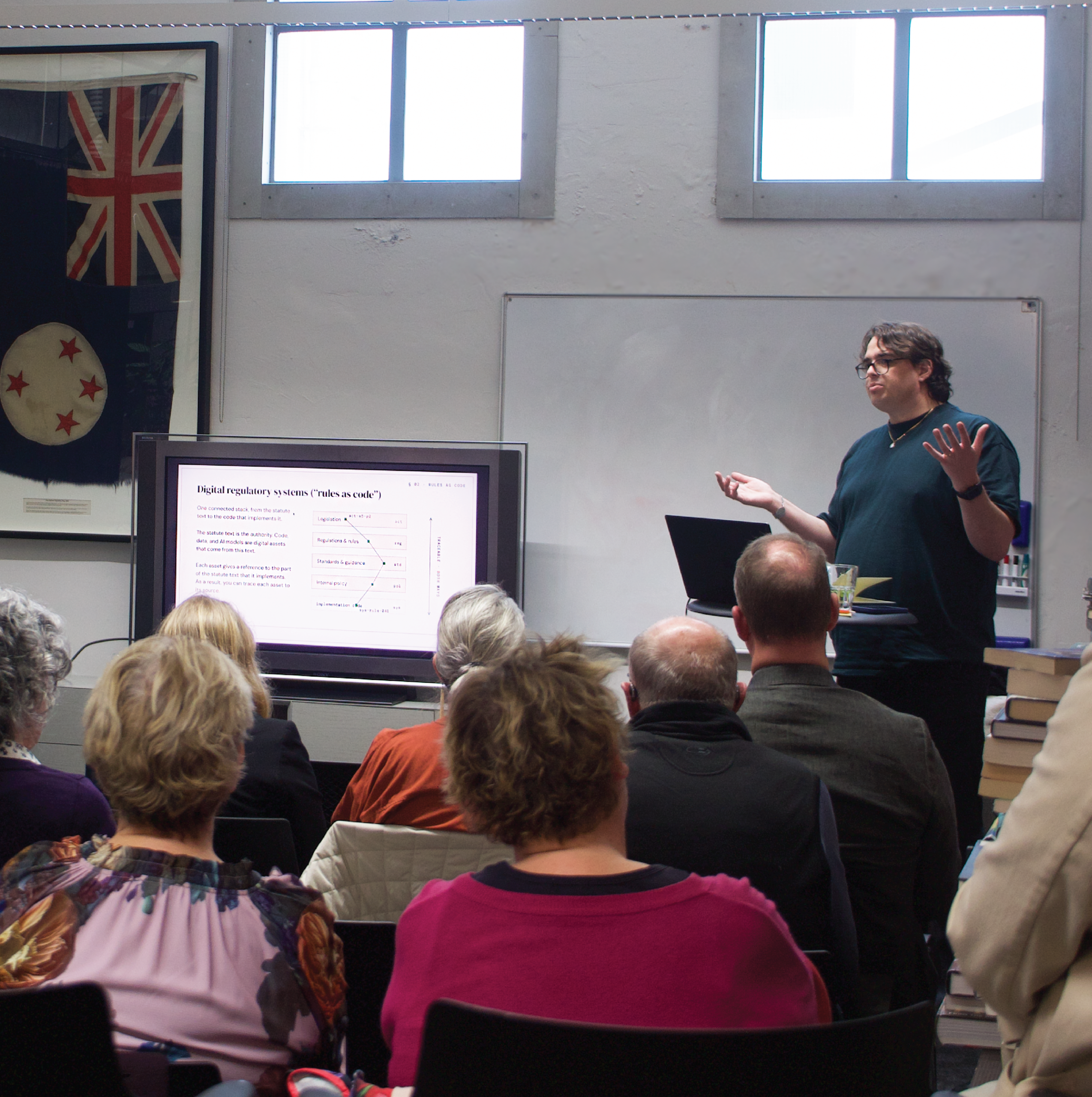
On 13 August 2026, the McGuinness Institute hosted a discussion with
Tom Barraclough, co-director of tech policy think tank Brainbox, and Co-Founder of tech company Syncopate Lab. Tom is a leading voice in New Zealand’s evolving conversation on artificial intelligence, digital government and regulatory technology.
Tom’s presentation explored a fundamental question: How can governments use AI and digital systems while maintaining transparency, accountability and public trust?
We are thrilled to introduce our new patron, Dr Dan Wildy. Dan is a Senior Lecturer at Massey University’s Centre for Defence and Security Studies and the Chief Executive of the Outdoor Access Commission, Herenga ā Nuku.
Given our recent work through the SecurityNZ project, it was timely to strengthen our capability and expertise in the defence and security sector. Dan’s skills, experience and interests align closely with the work programme we plan to pursue over the next 12 to 18 months, making him an excellent fit.
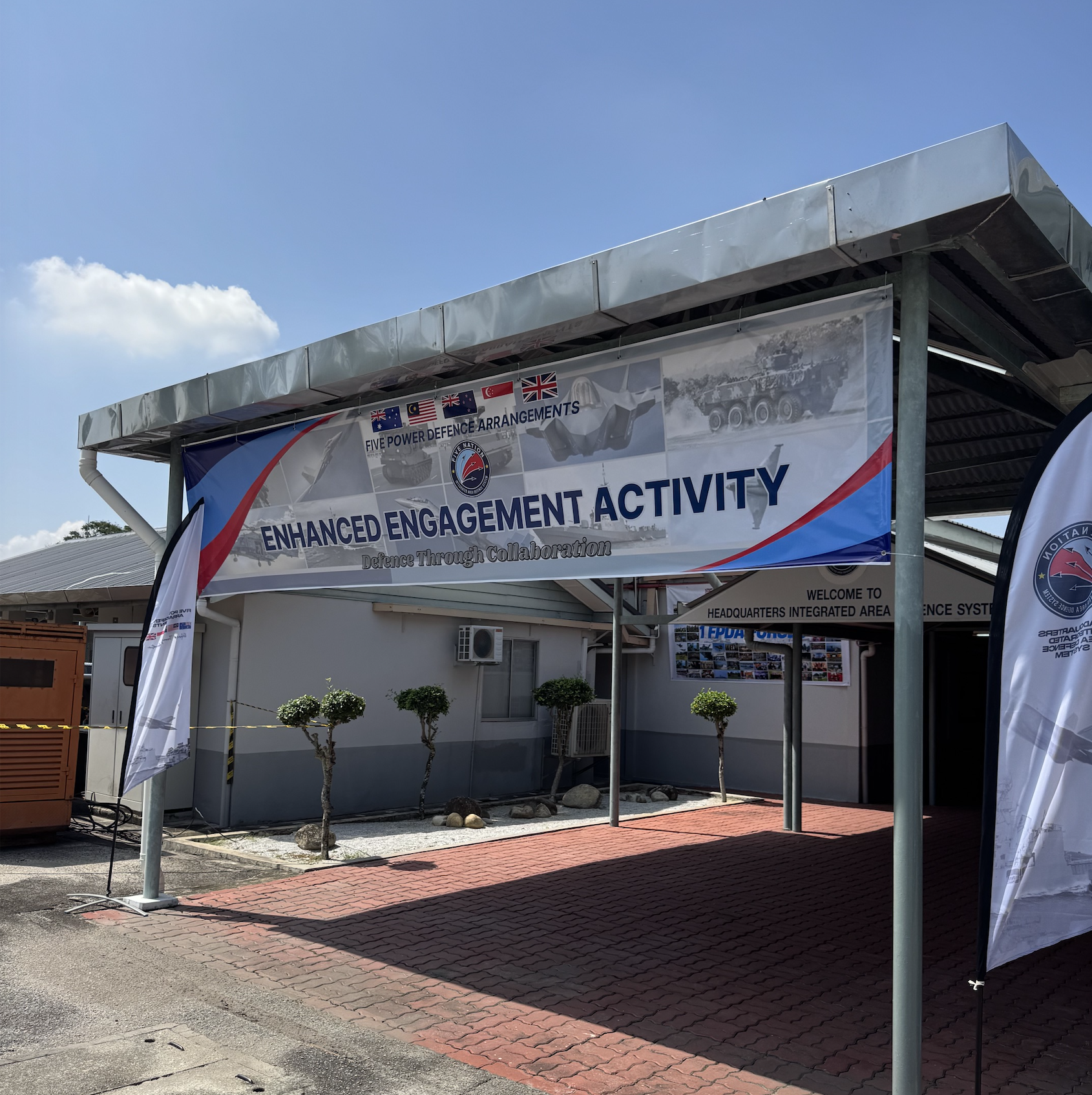
In May 2026, Wendy had the opportunity to travel to Penang, Malaysia, to observe and learn more about the Five Power Defence Arrangements (FPDA), one of the world’s longest-standing multilateral defence partnerships. Established in 1971, the FPDA brings together Australia, Malaysia, New Zealand, Singapore and the United Kingdom in a framework designed to support regional security, dialogue and military cooperation.